


The electric vehicle revolution has created unprecedented opportunities for innovators. Around the world, start-ups are developing new mobility solutions, from electric passenger cars and commercial vehicles to delivery fleets, micro-mobility platforms and specialised mobility concepts.
Yet, while launching an EV company has never seemed more achievable, bringing a vehicle from concept to production remains one of the most complex engineering challenges in modern industry.
The question many founders and engineering leaders are asking is: How can an EV start-up reduce development time, minimise technical risk and reach the market faster without compromising quality?
The answer increasingly lies in platform-based development.
Why EV Development Is Still a Significant Challenge
The rise of electrification has dramatically changed vehicle architecture, but it has not eliminated the complexity of vehicle development.
An EV consists of numerous interconnected systems, such as battery systems, electric powertrains, control software, and so on. Each element must work together seamlessly under real-world conditions.
For start-ups, the challenge is even greater. Unlike established OEMs, emerging companies often operate with limited engineering resources, restricted budgets and ambitious launch timelines. Consequently, every development decision has a direct impact on programme costs, investment requirements and market readiness.
The Hidden Cost of Starting from Scratch
Many new entrants believe that creating a unique vehicle requires designing every component from the ground up. In reality, this approach often introduces unnecessary complexity.
When engineering teams attempt to develop independently, they significantly increase development effort before the product can even enter validation. This can create a domino effect:
- Longer design cycles
- More engineering iterations
- Increased testing requirements
- Higher prototype costs
- Delayed market entry
The result is that valuable time and capital are consumed solving foundational engineering challenges rather than developing features that differentiate the product in the marketplace.
Why Time-to-Market Matters More Than Ever
For many EV start-ups, time is the most valuable resource. Investors, customers, and strategic partners expect measurable progress within specific timeframes. Delays can affect funding milestones, commercial opportunities and competitive positioning.
On top of that, the EV market is evolving rapidly, with new technologies, regulations and customer expectations emerging every year.

In an increasingly competitive environment, the ability to accelerate development has become a strategic advantage rather than simply an operational goal.
Why Platform-Based Development Is Gaining Momentum
One of the most significant changes in modern EV development is the adoption of platform-based engineering. Instead of building an entire vehicle architecture from scratch, companies leverage a proven foundation and focus their resources on areas that create customer value.
This approach is common in many industries. Software companies rarely build their own operating systems from the ground up. Instead, they innovate on top of established platforms that provide stability and scalability.
The same principle increasingly applies to vehicle development.
A well-designed EV platform can provide:
- Validated engineering foundations
- Faster development timelines
- Reduced technical uncertainty
- Scalable vehicle architectures
- Greater investment efficiency
For start-ups, platform-based development can dramatically reduce the effort required to reach a functioning, road-ready product.
What Should Start-Ups Look for in an EV Platform?
Not all vehicle platforms deliver the same value.
When evaluating potential solutions, start-ups should consider whether a platform offers:
| Modularity | Can the architecture adapt to different vehicle types, dimensions and use cases? |
| Scalability | Can the platform support future product variants without extensive redesign? |
| Digital Validation | Has the architecture been extensively assessed through advanced simulation tools? |
| Reduced Development Risk | Does the platform minimise engineering uncertainty and shorten validation cycles? |
| Integration Flexibility | Can different battery systems, powertrains and vehicle configurations be incorporated efficiently? |
| Faster Time-to-Market | Will the platform genuinely accelerate programme execution rather than introduce additional complexity? |
The strongest platforms provide both engineering confidence and commercial flexibility.
Introducing TEC|CAR: A Ready-to-Go EV Platform for Start-Ups
As digital engineering and platform-based development become increasingly important, our TEC|CAR has been designed to address the specific challenges faced by emerging EV manufacturers.
TEC|CAR is a ready-to-go EV platform concept created to help start-ups accelerate the journey from idea to road-ready hardware. Developed through the combined digital engineering expertise of TECOSIM and Delta Motorsport, with strategic consultation from Adriaan Gerber, the platform provides a modular, scalable architecture built on validated digital models.
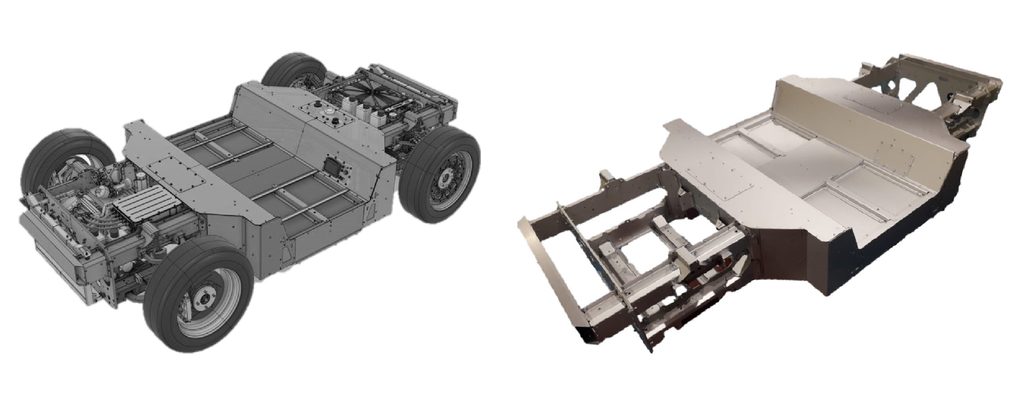
Rather than requiring engineering teams to solve fundamental vehicle architecture challenges repeatedly, TEC|CAR offers a robust starting point that enables innovators to focus on product differentiation and business growth.
Key benefits include:
- Modular platform architecture
- Scalable vehicle development foundation
- Reduced technical risk
- Lower development investment
- Faster prototyping and validation
- Accelerated programme execution
For start-ups seeking to move quickly while maintaining engineering confidence, a validated platform approach can provide a significant competitive advantage.
Accelerating EV Launches with Platform-Based Development
The greatest value of a ready-to-go EV platform lies in its ability to compress development timelines.
By combining digital engineering methodologies with pre-engineered vehicle architectures, organisations can eliminate many of the delays associated with traditional development processes.
With TEC|CAR, start-ups can potentially:
- Launch up to 18 months sooner
- Reduce physical testing requirements by up to 70%
For growing companies, these advantages can translate into faster revenue generation, earlier customer acquisition, improved investor confidence, reduced programme expenditure, and stronger competitive positioning.
Most importantly, teams can focus their efforts on innovation rather than repeatedly addressing foundational engineering challenges.
The Future Belongs to Faster Innovators
The next generation of successful EV companies will not necessarily be those with the largest engineering departments or the highest budgets. Instead, they will be organisations that effectively combine digital engineering, virtual validation, intelligent platform strategies, and agile development methodologies.
For EV start-ups, embracing these approaches can mean the difference between a prolonged development cycle and a successful market launch.
TEC|CAR represents one example of how ready-to-go EV platforms are helping emerging mobility innovators reduce risk, accelerate development and bring road-ready vehicles to market with greater confidence.
Beyond providing a validated vehicle platform and body engineering foundation, TEC|CAR is backed by Drive System Design’s expertise in EV powertrain development. Together, this enables start-ups to accelerate both vehicle architecture and electric drive system development, reducing complexity and shortening the path to market.
Want to accelerate your EV programme without compromising engineering quality? Connect with us to learn more about our ready-to-go EV platform, TEC|CAR: info@uk.tecosim.com